Connection Corner
From a New Gathering to Lasting Relationships - November 2026
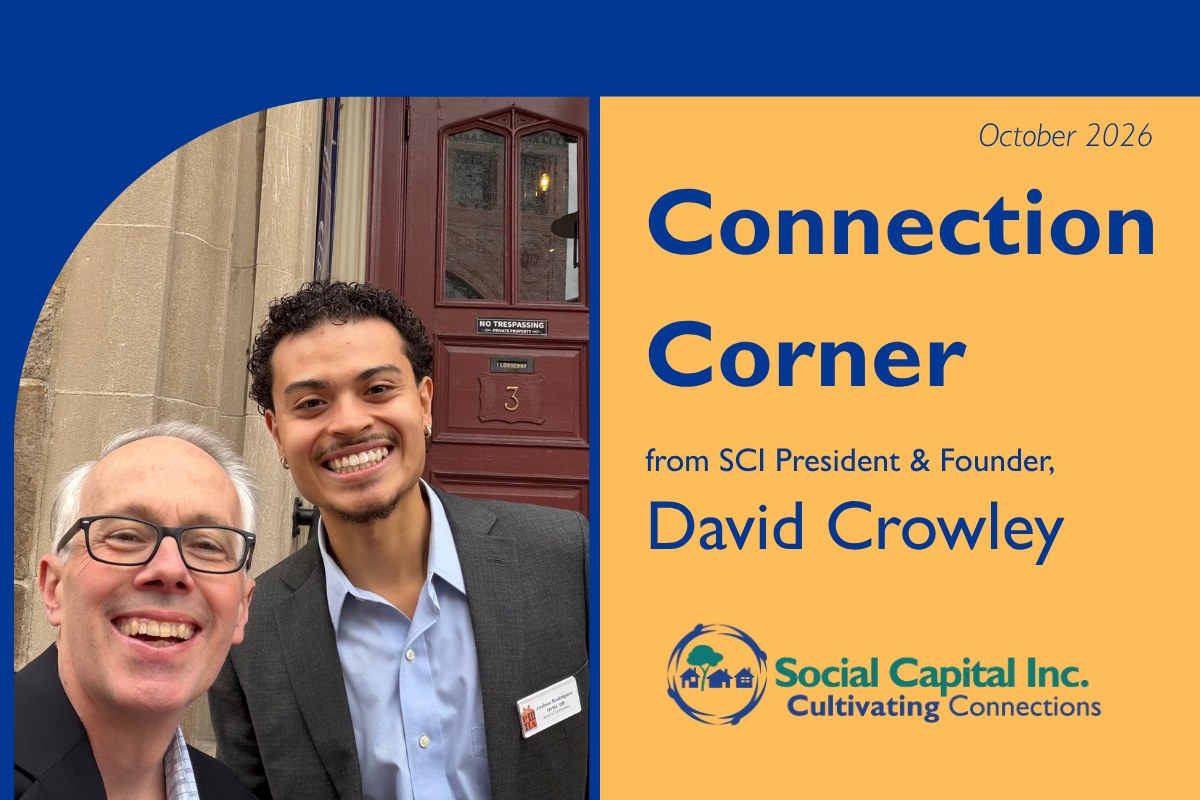
Welcome to the November edition of Connection Corner! This month, I’m sharing reflections on how we build connections through everyday interactions, welcoming places, and intentional efforts to bring people together. This builds on themes we covered in the October Connection Corner roundup.
I’m also revisiting a couple of earlier posts that offer practical lessons about creating a sense of community. From developing a sense of community while traveling to a gathering of people passionate about strengthening social connection, these stories remind us of the many ways we can build social capital.
Choosing Kindness in Everyday Encounters
A recent encounter on a Boston sidewalk reminded me how small acts of kindness can make a difference.
A parking attendant had just issued a ticket when the driver returned to his car. Rather than responding angrily, he smiled and acknowledged that she was simply doing her job. It was a small moment, but one that could easily have gone differently.
Researchers Tim Lomas and Tyler VanderWeele have been exploring the concept of microkindness, including how everyday acts of kindness might spread through our social interactions.
In my Connection Corner video, I reflect on how choosing kindness in frustrating situations can help create a more positive environment for connection.
Finding Community While Traveling
Within 48 hours of arriving in Barcelona, I was already referring to places as “my neighborhood coffee shop” and “my neighborhood tapas place.” That got me thinking about what makes us feel connected to a place.
Part of it was the neighborhood itself: walkable streets, welcoming public spaces, and locally owned businesses. But part was how I engaged with it, returning to familiar spots and developing small daily rituals.
The experience reminded me that we can be intentional about creating a sense of belonging, whether we’re traveling or spending time in our own neighborhoods.
When Local Businesses Become Third Places
A recent dinner with friends reminded me of the community that Lori and Ray Schaefer created through their former Pairings wine shop.
The wines and food were wonderful, but what kept people coming back was much more than that. Pairings became a Third Place, a term popularized by sociologist Ray Oldenburg to describe gathering spots outside home and work where people build relationships.
Reflecting on what made Pairings special, three things stood out: a welcoming atmosphere, connections with other local businesses, and the relationships that developed into lasting friendships.
Even though the shop has closed, the friendships it helped create continue. It’s a reminder of the important role local businesses can play in strengthening the social fabric of our communities.
Read my original article about how Third Places build social capital, which mentions Pairings as an example.
Building Connections Before a Crisis
I recently reconnected with Mark Curtin, who served as an AmeriCorps member with me more than 25 years ago, when he invited me onto his podcast, The How to Man Show.
Mark is now a firefighter, and he shared examples of people calling emergency services for situations where what they really needed was a good neighbor or friend to call.
Our conversation reinforced an important point: building social capital isn’t something we should wait to do until we need help. The everyday relationships we develop with neighbors and friends can provide a foundation of support when challenges arise.
Check out the Connection Corner clip or watch to the full conversation.
Investing in Social Capital and Economic Opportunity
A recent Union Capital Boston event posed an important question: Why is social capital worth investing in?
The gathering highlighted Union Capital’s work helping members build relationships that can open doors to opportunity. One member shared a moving story about how participating in the organization had influenced her path.
The discussion also brought to mind research led by Harvard economist Raj Chetty on economic connectedness. His findings highlight the strong relationship between friendships across socioeconomic lines and upward economic mobility.
Union Capital reports a 33% decline in unemployment among its members one year after joining, an encouraging example of the outcomes associated with its community-building work.
Can We Get Better at Connecting?
I’ve recently finished Adam Grant’s new book, Vibe, which explores how we can develop stronger human connections.
The book’s central premise resonates with more than 20 years of work at SCI: meaningful connection isn’t simply something that happens by chance. We can develop skills and habits that help us build stronger relationships.
In a recent Connection Corner video, I shared some initial reflections on the book and how its ideas connect with our work.
Connecting Through the SCI Network
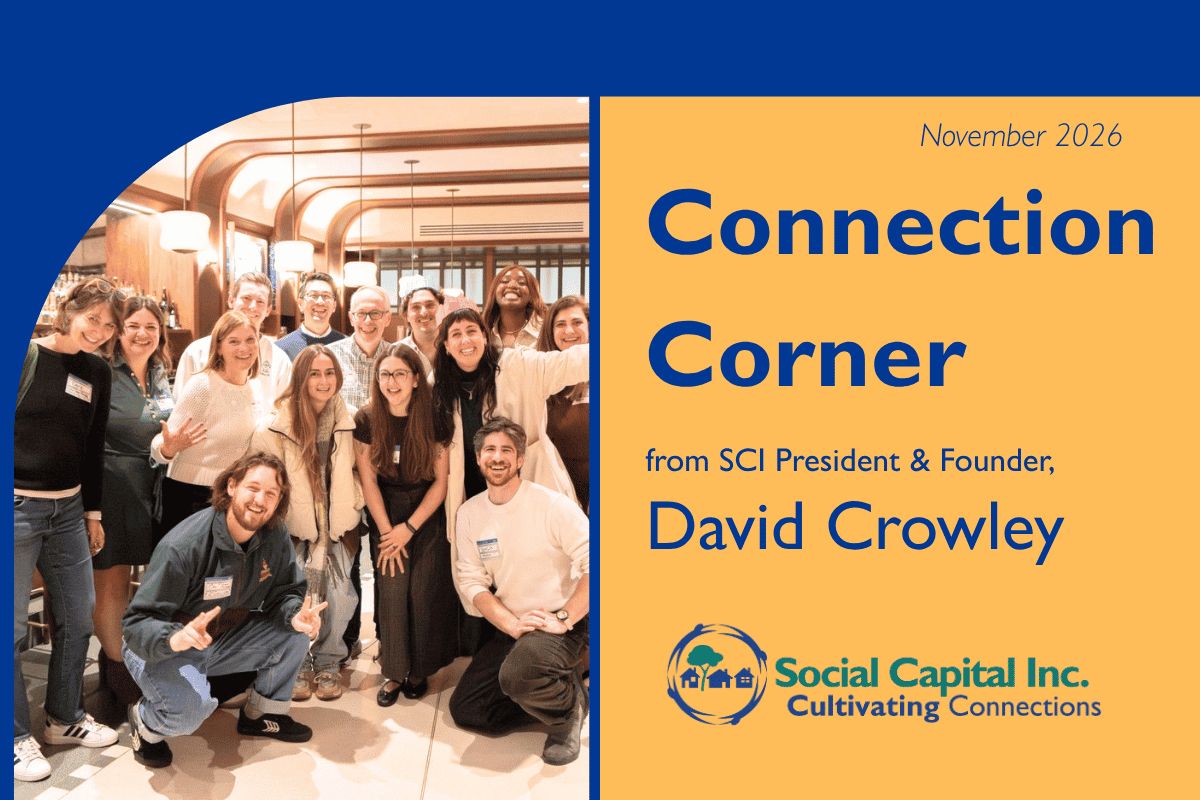
We kicked off our new season of SCI Network Connection events with a wonderful gathering hosted by longtime SCI supporters Beth Llewellyn Lavoie and Dave Lavoie.
Our conversation focused on the mentors who have made a difference in our lives and the importance of mentoring others. It was a natural opportunity to highlight how people can give back by volunteering as Pitch Coaches for our SCI Youth Grant Pitch Contest.
We’re planning roughly monthly Network Connection gatherings in homes, restaurants, and other community spaces. These events offer opportunities to meet new people, strengthen existing relationships, and explore ways to get involved in building social capital.
Read my recap of the October gathering. Interested in attending a future event? Let me know, and we’ll add you to the invitation list.
Bringing Connectors Together During Human Week
I had the opportunity to facilitate a “Calling All Connectors” workshop at the inaugural Boston Human Week. There was a great response to the topic. Participants shared approaches to building community and intentionally fostering meaningful connections.
One encouraging sign was how eager people were to continue connecting after the session. We plan to have some follow-up gatherings of people that are interested in sharing ideas with fellow community-builders. Thanks to Goulston & Storrs for hosting this session and to the event founders who organized human week.
Read my Human Week reflections.
Explore Further
- Microkindness: Tim Lomas and Tyler VanderWeele, Contributions towards a Positive Epidemiology of Compassion (2026). Explores how small acts of kindness might spread through social interactions.Robert Putnam
- The Impact of Kindness: Amit Kumar and Nicholas Epley, A Little Good Goes an Unexpectedly Long Way (2023). Research showing that people tend to underestimate how much others appreciate their kind gestures.
- Social Capital and Economic Mobility: Raj Chetty and colleagues, Opportunity Insights research summary (2022). Explores the relationship between economic connectedness and upward mobility.